 Dubuque Winter Farmer's Market

Dubuque Winter Farmers’ Market is educational.
It’s “back to school” on Saturday mornings at the Winter Farmers’ Market. Where else can you learn about heirloom varieties of vegetables, the history of Belgian waffles, growing bay leaf trees, and raising grass-fed beef? How do you cook blue potatoes? How do bees survive the winter? You can find the answers to all these questions and much more at the market. Our vendors want to help you understand how food gets to your table, so you’re sure to learn a thing or two next time you visit.
Kristi’s Perfect Produce
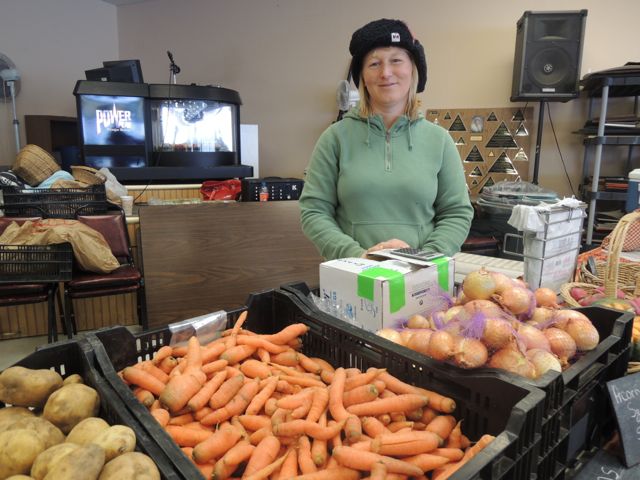
Kristi Bellmann is not a newcomer to farm and garden life. She grew up on a dairy farm and has led her family into the farmers’ market arena. After her son was born, Kristi began growing vegetables and selling them at market to supplement her income. A year later, her parents joined her, adding eggs, beef, pork, and chicken to her offerings. This addition made them the first meat vendors at Dubuque farmers’ markets.
Since that time, Kristi’s sale items and farming practices have continued to grow. She takes advantage of the many opportunities for education and improvement available in the region. Kristi has learned and implemented various methods of extending her variety of produce and the growing season. She has added hoop houses and high tunnels to accomplish that purpose.
Kristi does most of the work in her gardens by herself, with occasional help from her two children, ages 9 and 5. At harvest time, she sometimes hires a couple of high school students. To improve the efficiency of their operation, Kristi’s family is installing a robotic milking system this spring. It’s been a busy winter since they’re doing a lot of the construction themselves, but once the system is up and running it will help increase their quality of life and decrease some of the stresses of farming.
While many rush to market in order to buy Kristi’s prized spinach (expected again in March!) and salad greens, her stand boasts much more. During the growing season, there is hardly a vegetable she does not sell. In winter, carrots and root vegetables, including beets and turnips, blue, red, and white potatoes decorate her table. Even this late in the season she has a surprising amount of home-grown produce available. Kristi also offers a wide variety of jams and jellies. Year round, meats, eggs, and cheese are available.
Stop by Kristi’s Perfect Produce market stand any week, and you will surely find something to improve your week’s menus. If you plan your stop at a moment when they are not busy, you will find Kristi a highly knowledgeable, albeit humble, gardener, who loves sharing all that she has learned about growing “perfect produce.”
How to make your own chicken stock from scratch

One of the benefits of making your own broth, apart from having better control over the sodium, is that it can be cheaper than store-bought. Buying bone-in meat is usually cheaper than boneless skinless meat, and can give a meatier flavor to the broth. To save even more money, purchase a whole chicken and butcher yourself. If that’s too intimidating, just get the whole cut-up chicken.
Dubuque Winter Farmers’ Market is economic development.
Farmers’ Markets are thriving in Iowa. A 2009 study showed a 92% increase in farmers’ market activities over the previous five years, resulting in over $71 million of direct and indirect economic impact. With over 200 active markets, Iowa boasts the greatest number of markets per capita in the nation. Farmers’ Markets create opportunities for entrepreneurs and provide outlets for inventive, hard-working people to sell their goods. The vitality, energy and creativity fostered by our market is good for our economy. Connecting farm businesses directly to consumers eliminates the middle-man and brings you the freshest goods at the best price. Thank you for shopping at the market and helping our local economy grow.
Vegetable Soup with Kale and Lentils
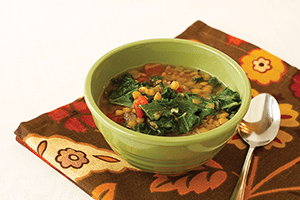
INGREDIENTS
2 tablespoons vegetable oil
1 medium onion, chopped (about 1 cup)
1 medium carrot, sliced 1/8 inch thick
2 teaspoons garlic, peeled and minced (3-4 cloves),
or 1/2 teaspoon garlic powder
4 cups water
1 cup dry yellow or brown lentils
1 can (14.5 ounces) reduced sodium chicken broth
1 tablespoon dried basil or Italian seasoning
1 can (14.5 ounces) no sodium added diced tomatoes
or 2 chopped tomatoes
1 bunch kale (about 7 ounces)
1/4 teaspoon salt
1/8 teaspoon black pepper
DIRECTIONS
1. Heat oil in a large pot over medium heat.
2. Add onions, carrots, and garlic. Cook 5 minutes.
3. Add water to veggies in pot. Heat to boiling.
4. Rinse lentils in colander with water. Add lentils to pot and simmer for 20 minutes. Do not drain.
5. Add chicken broth, dried basil or Italian seasoning, and tomatoes. Cover and cook for 5-10 minutes.
6. Rinse kale leaves, cut out the main stems and discard. Cut leaves into 1-inch pieces.
7. Stir kale, salt, and pepper into lentil mixture. Return to boiling. Reduce heat, cover, and simmer for 3 minutes.
TIPS
Skip soaking the lentils first for this recipe. It is not needed.
Use kitchen scissors instead of a knife to cut the kale.
Make kale chips from extra leaves. Drizzle a little oil on clean, dry leaves. Spread leaves on a cookie sheet. Bake 12-20 minutes at 350 degrees F. Leaves should be thin and crackly but not brown. Remove from oven and sprinkle with salt.
Recipe from Iowa State Extension
Cabbage & Carrot Salad with Peanut Sauce

This tasty recipe can be made with cabbage, carrots and honey available this Saturday at Winter Market!
INGREDIENTS
1 3-3/4 ounce package bean threads (cellophane noodles)
1/4 cup reduced-sodium chicken broth
3 tablespoons creamy peanut butter
2 tablespoons reduced-sodium soy sauce
2 tablespoons honey
1 teaspoon lime juice
1/2 teaspoon toasted sesame oil
1 clove garlic, minced
3 cups shredded cabbage
1 cup coarsely shredded carrots (2 medium)
1/2 cup snipped fresh cilantro leaves
1/4 cup chopped honey-roasted peanuts
Lime wedges
DIRECTIONS
1. In a large bowl soak bean threads in enough hot water to cover for 10 minutes. Drain well. Using kitchen shears, snip bean threads into smaller strands.
2. Meanwhile, in a large bowl combine broth, peanut butter, soy sauce, honey, lime juice, sesame oil, and garlic. Add cabbage and carrots. Toss to combine.
3. Divide noodles among four serving plates. Top with cabbage mixture. Sprinkle cabbage mixture with cilantro and peanuts. Serve with lime wedges.
Recipe from Better Homes and Gardens
Cutting onions without tears
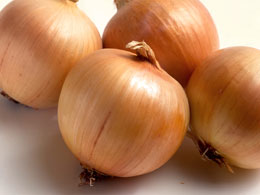
The tearjerker in onions is a compound called propanethial-s-oxide, which is released in a vapor when onions are cut. When the vapor comes in contact with the eye, it is converted to a form of sulfuric acid, which produces the stinging sensation and subsequent tears. Cutting onions under water or chilling them before cutting, will retard the enzymes that generate the noxious chemicals.
Some other suggestions people have mentioned for preventing tears when working with onions include:
* Keep the root on while peeling and chopping. A variation of this is to cut from the top leaving the root end intact until the last cut!
* Be in a well-ventilated place and cut fast!
* Use a good, sharp chef’s knife. It glides through the onion with ease, allowing less of the compounds that cause tears to come out.
* Wear a pair of safety goggles or a cheap, disposable painter’s mask.
* Put a slice of bread in your mouth, with half of it sticking out to “catch” the fumes.
* Put some white vinegar on the chopping board before cutting.
* Burn a candle immediately adjacent to where you’re cutting. The tear-causing gas is drawn toward the heat source.
After cutting the onions (and garlic), a suggestion that may help remove the smell from your hands is to run cool tap water over your hands while rubbing them across a stainless steel utensil, such as the bowl of a stainless steel spoon. If you have been cutting a lot of onions, this may not be as effective.
Source: University of Nebraska Extension
Rutabaga Hash with Onions and Crisp Bacon

Just when you thought you were sick and tired of root vegetables! This delicious and adaptive recipe was created by Chef Patrick Hanniford at Hy-Vee on Asbury.
INGREDIENTS
4 slices bacon
Olive oil
1.5 lb potatoes
1.5 lb rutabaga
1 medium onion, diced
2 celery stalks, thinly sliced
1 Anaheim chili, diced
1 small jalapeno, minced
3/4 tsp kosher or fine sea salt
1/2 tsp pepper
3 Tb chopped cilantro
Tabasco
DIRECTIONS
1. Cook bacon in a 12″ skillet, over medium-high heat until crisp (5-8 minutes). Using a slotted spoon, transfer to paper towels to drain.
2. In a separate pan, add 2 Tb of olive oil. Sauté rutabagas, potatoes, and onion in fat over medium-high heat until onion starts to soften (2 min). Reduce heat to medium, cover tightly with lid or foil, and cook, stirring once, until rutabagas are tender when pierced (7-12 min).
3. Stir in celery, chilies, salt, and pepper; cook uncovered, stirring frequently, until rutabagas are browned and celery and chilies are fairly tender, 7 to 10 minutes. Fold in cilantro and bacon. At the table, add tabasco to taste.
4. Enjoy with over easy eggs for breakfast, brunch or dinner!
How to roast vegetables
Many of the vegetables available in the Winter Market taste great when roasted. Check out this video for tips on how to create your own recipes using available local produce.
Be careful with holiday party leftovers
When the party is over, be sure the leftover food gets packed up and stored properly right away. Don’t leave things sit out on the counter for too long. Temperatures between 40 and 140 degrees Fahrenheit allow bacteria (germs) to grow rapidly in food, so keep leftovers out of this “temperature danger zone.”
To keep your family safe, follow these tips:
CLEAN – Wash hands and surfaces often.
SEPARATE – Don’t cross contaminate!
COOK – Cook to proper temperatures.
CHILL – Refrigerate promptly!


